Clinical Management
The first step to improving outcomes for patients with MTBI is to determine a plan of action for follow-up. Based on the findings of an evaluation, such as that provided by the ACE, the physician may decide to:
Monitor the Patient in the Office.
Office monitoring is particularly appropriate if the number and severity of symptoms are steadily decreasing over time and/or fully resolve within 3 to 5 days. However, if symptoms have not fully abated in this time period, or remain steady or worsen, referral to an MTBI specialist may be warranted.
Make a Referral to an MTBI Specialist.
Referral to a specialist who cares for patients with MTBI is appropriate if symptom reduction is not evident within 3 to 5 days post injury, or sooner, and if the type or severity of symptoms is of concern. Referral to a specialist can be particularly valuable to further evaluate the patient's complex presentation and to help manage certain aspects of their condition (e.g., return to sports, school, and work). (Information about specific TBI specialists in a particular area is often available through state or national brain injury associations.)
Refer the Patient for Diagnostic Testing.
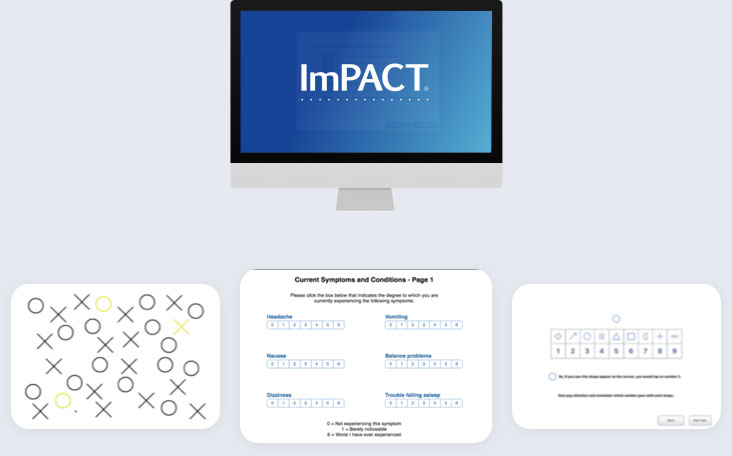
During the acute phase, diagnostic tests may include neuroimaging (such as a CT or MRI scan) or neuropsychological testing.34 Neuropsychological tests, which involve performance of specific cognitive tasks, can be helpful for confirming self-reported symptoms and tracking recovery. They assess a range of abilities such as memory, concentration, information processing, executive function, and reaction time.34 Brief (approx. 25 minutes) and recently validated computerized test batteries and/or abbreviated traditional (paper and pencil) test batteries may be most practical and informative during this early phase.
Neuropsychological tests may also be helpful for determining the appropriate timing for return to safe sports participation, school, or work. Any indication or suspicion of neurologic deterioration should prompt strong consideration for referral to emergency medical evaluation and/or neuroimaging to rule out intracranial bleed or other structural pathology. For patients with persisting symptoms, more extensive neuropsychological and neurobehavioral test batteries can be useful for identifying specific deficits and needed supports for return to daily activities, school, or work.
Concussion Management Plan
It is critical for the physician to guide the patient in their recovery with an
active management plan based on their current symptom presentation. Careful
management can facilitate recovery and prevent further injury. The two
ACE Care Plans (see Figure 3) included in this tool kit are based on current research and
clinical experience and were developed to help physicians actively manage
patients with known or suspected MTBI.
![]() |
Figure 3. ACE Management Plan |
Rest and Careful Management of Physical and Cognitive
Patients must not return to high risk activities (e.g., sports, physical education (PE), high speed activity (riding a bicycle or carnival rides), if any postconcussion symptoms are present or if results from cognitive testing show persistent deficits. When symptoms are no longer reported or experienced, a patient may slowly, gradually, and carefully return to their daily activities (both physical and cognitive). Children and adolescents will need the help of their parents, teachers, coaches, athletic trainers, etc. to monitor and assist with their recovery. Management planning should involve all aspects of the patient's life including home life, school, work, and social-recreational activities.
When concussion symptoms are no longer reported or experienced, a patient may slowly, gradually and carefully return to their daily activities. Children and adolescents will need the help of their parents, teachers, coaches, athletic trainers, etc. to assist in their recovery. Concussion management plans should involve all aspects of the patient's life including home life, school, work, and social-recreational activities.
Returning to Daily Home/Community Activities
Increased rest and limited exertion are important to facilitate the patient's recovery. Physicians should be cautious about allowing patients to return to driving, especially if the patient has problems with attention, processing speed, or reaction time. Patients should also be advised to get adequate sleep at night and to take daytime naps or rest breaks when significant fatigue is experienced. Symptoms typically worsen or re-emerge with exertion. Let any return of a patient's symptoms be the guide to the level of exertion or activity that is safe.
Patients should limit both physical and cognitive exertion accordingly.
- Physical activity includes PE, sports practices, weight-training, running, exercising, heavy lifting, etc.
- Cognitive activity includes heavy concentration or focus, memory, reasoning, reading or writing (e.g., homework, classwork, job-related mental activity)
As symptoms decrease, or as cognitive test results show improvement, patients may return to their regular activities gradually. However, the patient's overall status should continue to be monitored closely.
Returning to School
Symptomatic students may require active supports and accommodations in school, which may be gradually decreased as their functioning improves. Inform the student's teacher(s), the school nurse, psychologist/counselor, and administrator of the student's injury, symptoms, and cognitive deficits. Students with temporary yet prolonged symptoms (i.e. longer than several weeks) or permanent disability may benefit from referral for special accommodations and services, such as those provided under a Section 504 Plan.
School personnel should be advised to monitor the student for the following signs:
- Increased problems paying attention/concentrating
- Increased problems remembering/learning new information
- Longer time required to complete tasks
- Increase in symptoms (e.g., headache, fatigue) during schoolwork
- Greater irritability, less tolerance for stressors
Until a full recovery from concussion is achieved, students may need the following supports:
- Time off from school
- Shortened day
- Shortened classes (i.e., rest breaks during classes)
- Allowances for extended time to complete coursework/assignments and tests
- Reduced homework/class work load
- No significant classroom or standardized testing at this time
- Rest breaks during the day
Physicians and school personnel should monitor the student's symptoms with cognitive exertion (mental effort such as concentration, studying) to evaluate the need and length of time supports should be provided.
Returning to Play (Sports and Recreation)
Guiding the recovery of individuals of any age with MTBI who participate in competitive or recreational activities requires careful management to avoid re-injury or prolonged recovery. Athletes engaged in collision sports require special management and evaluation to ensure full recovery prior to their return to play.
An individual should never return to competitive sporting or recreational activities while experiencing any lingering or persisting MTBI symptoms. This includes PE class, sports practices and games, and other high-risk/high-exertion activities such as running, bike riding, skateboarding, climbing trees, jumping from heights, playful wrestling, etc. The individual should be completely symptom free at rest and with physical exertion (e.g., sprints, non-contact aerobic activity) and cognitive exertion (e.g., studying, schoolwork) prior to return to sports or recreational activities.
Along with parent and teacher observation for continuing signs or symptoms of concussion, objective data in the form of formal neuropsychological testing may provide valuable information to assist with return to play decisions in younger athletes, as their symptom reporting may be more limited and less reliable. Formal neuropsychological testing of competitive athletes may also help physicians with return to play decisions, as athletes may minimize their symptoms to facilitate return to play.1
It is important to inform the athlete's coach, PE teacher, and/or athletic trainer that the athlete should not return to play until they are symptom-free and their cognitive function has returned to normal, both at rest and with exertion.
Return to play should occur gradually. Individuals should be monitored for symptoms and cognitive function carefully during each stage of increased exertion. Patients should only progress to the next level of exertion if they are asymptomatic at the current level. In competitive sports, a specific return to play protocol outlining gradual increase in activity has been established by the Concussion in Sport Group:1
- Rest
- Aerobic exercise (.e.g., stationary bicycle)
- Sport Specific training (e.g., running, skating)
- Non-contact drills (includes cutting and other lateral movements)
- Full-contact controlled training
- Full-contact game play
Returning to Work
Return-to-work planning should be based upon careful evaluation of symptoms and neurocognitive status. To help expedite recovery from MTBI, patients may initially need to reduce both physical and cognitive exertion. Rest is key. Restricting work during initial stages of recovery may be indicated to help facilitate recovery. Repeated evaluation of both symptoms and cognitive status is recommended to help guide management
Until a full recovery is achieved, patients may need to the following supports:
Schedule Considerations:
- Shortened work day (e.g. 8am-12 noon)
- Allow for breaks when symptoms increase
- Reduced task assignments and responsibilities
Safety Considerations:
- No driving
- No heavy lifting/No working with machinery
- No heights due to risk of dizziness, balance problems
Become an ImPACT® Client:
Testimonials
I was at the ImPACT workshop at NATA in Atlanta, and was in “awe” over everything presented. You folks have a very wonderful product...you also did a fine job putting things together to make it a great, great program.
- Jay Albrecht, ATC, North Dakota State University
More About ImPACT®
Headquartered in Pittsburgh, Pennsylvania, ImPACT Applications, Inc., is a provider of computerized neurocognitive assessment tools and services that are used by medical professionals to assist them in determining an athlete's fitness to return to play after suffering a concussion. At the current time, ImPACT is being used for concussion management services at more than 1,000 high schools, colleges, sports medicine centers, and professional teams throughout the world.